Sidcup High Street removals guide for narrow access
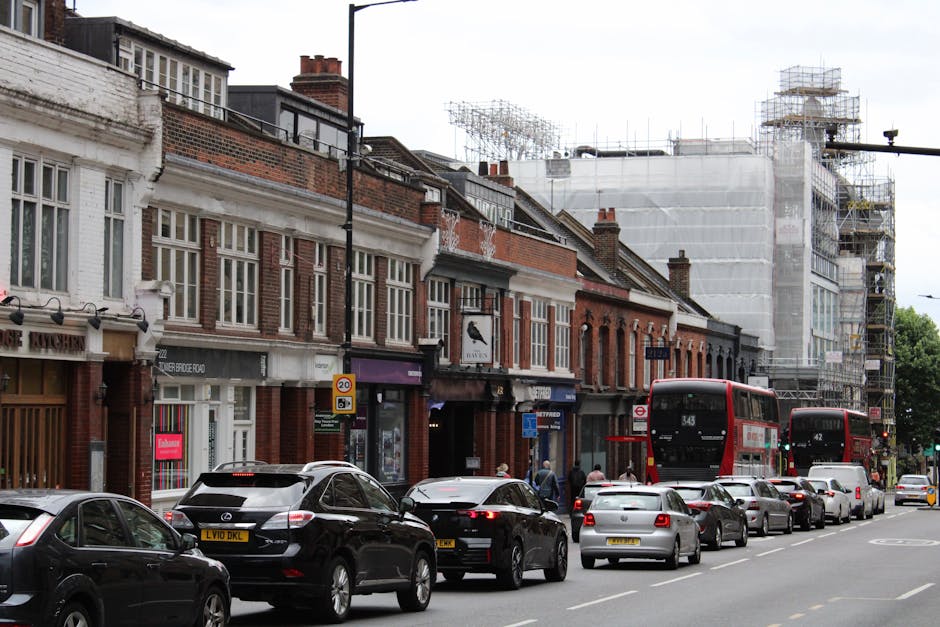
Moving on or near Sidcup High Street can feel straightforward on paper, then suddenly tricky the moment you meet a narrow doorway, a tight stairwell, or a van that seems to take up half the road. If that sounds familiar, you are in the right place. This Sidcup High Street removals guide for narrow access breaks down how to plan a move when space is limited, what to check before moving day, and how to reduce the stress that comes with awkward access. The goal is simple: fewer surprises, less lifting, and a move that stays controlled even when the street or property is anything but roomy.
Whether you are moving from a flat above a shop, a small house with a cramped hallway, or an office with back-of-house access that is a bit of a squeeze, careful planning makes all the difference. To be fair, most removal problems are not dramatic disasters. They are small things that stack up: a van parked too far away, a sofa that will not turn the corner, or boxes packed too heavily for a narrow staircase. Handle those early, and the whole day gets easier.
Below, you will find a practical, human guide to access checks, packing strategy, parking considerations, risk reduction, and the best way to decide whether a full removals team, a man and van service, or a more flexible approach is the right fit.
Why Sidcup High Street removals guide for narrow access Matters
Narrow access changes the whole shape of a move. On a wider road, removal teams can often park close, use a trolley smoothly, and load in a straight line. On a tighter stretch near a busy high street, the distance between the front door and the vehicle matters just as much as the contents of the property. More distance means more lifting, more time, and more chances for something to knock, snag, or chip.
Sidcup High Street has the kind of mixed access that catches people out: flats above commercial premises, side entrances that are not obvious at first glance, older buildings with awkward corners, and the usual real-life stuff like foot traffic, parked cars, and bins that seem to appear exactly where you do not want them. That is why planning for narrow access is not overcautious. It is just sensible.
There is also the stress factor. When access is tight, you do not want moving day decisions made in a rush. If a wardrobe has to be dismantled, if a sofa needs a carry strap, or if a fridge has to wait for a second pair of hands, those decisions are best made before the van arrives. In our experience, the calmest moves are the ones where the awkward bits are discussed early, not when everyone is already sweating and looking at the staircase like it has personally offended them.
A narrow-access move also affects service choice. Some people need a full removals package with packing support and careful handling. Others only need help with a couple of large items, so a lighter-touch option such as small removals or a local load-and-go arrangement may make more sense. The access itself often decides the method.
How Sidcup High Street removals guide for narrow access Works
The basic idea is to remove guesswork. A narrow-access move works best when the route, the load, the people, and the timetable are all matched to the property rather than treated as a standard job. That means looking at the building, the street, and the items together.
First, you assess access. Can a van stop near the door? Is there a loading bay, private driveway, rear entrance, or shared courtyard? Are there steps at the entrance, and if so, how steep are they? Do the hallways have corners that force furniture to pivot awkwardly? Is the stairwell narrow enough that boxes should be kept smaller than usual? These questions are the difference between a smooth move and one full of unplanned pauses.
Second, you plan the load order. Heavy or bulky items should be identified early. A large bookcase, a mattress, a desk, and a washing machine all behave differently in tight spaces. In narrow properties, the order in which items leave the building can matter almost as much as the route itself. Move the wrong thing first and you block the corridor. Move the right thing first and suddenly the rest of the job flows better.
Third, you prepare the packing. Tighter access means more chance of scraping walls or twisting at awkward angles, so packing needs to be neat, labelled, and not overfilled. Strong boxes matter. So do protective wraps, good tape, and sensible box sizes. A smaller box that a person can safely carry down a narrow staircase is better than a giant one that looks efficient and then becomes a hazard.
Finally, you keep the day flexible. Narrow access often brings small delays, and that is normal. A team may need to re-angle a sofa or remove a door temporarily. Sometimes a route that looked possible from the pavement is simply less workable once you are inside. The best moves build in a bit of breathing room rather than scheduling every minute to the edge.
Key Benefits and Practical Advantages
Good planning for narrow access is not just about avoiding problems. It creates real practical advantages that you feel on the day and after the move.
- Fewer delays: when access is checked in advance, you spend less time improvising.
- Lower risk of damage: careful route planning reduces the chances of scuffs, knocks, and strained lifts.
- Safer handling: a clear plan is easier on backs, hands, and stairwells, which matters more than people think.
- Better vehicle choice: a narrow street may suit a smaller van or a staged loading approach better than a single large vehicle.
- Less disruption to neighbours or traders: on a busy high street, staying organised helps keep pathways clear.
There is also a financial benefit, even if it is indirect. Better access planning can reduce wasted time and avoid last-minute changes, and that often keeps the overall move more efficient. You may still need extra help or a different vehicle, of course, but the point is to make decisions before the pressure builds.
One more thing people sometimes forget: narrow access is not only about the removal team. It affects you, too. If you are trying to move while juggling work calls, children, or a tight handover deadline, a structured plan can make the difference between a manageable day and a deeply annoying one. Nobody needs a moving day that feels like a school sports day, but with cardboard.
Who This Is For and When It Makes Sense
This guide is useful if any of the following sound familiar:
- You live in a flat above shops or near the busy stretch of Sidcup High Street.
- Your home has a narrow hallway, small stairwell, or awkward turn near the front door.
- You are moving furniture out of a property with limited parking or no easy loading area.
- You need help with a move that is too large for a single-car load but too awkward for a standard van-only approach.
- You are moving a business, office, or storage load where access to the building is tight.
It also makes sense if you are not even fully sure access is a problem yet. That sounds odd, but it happens all the time. Someone assumes their wardrobe will fit, only to realise the staircase turns more sharply than expected. Or they assume the van can wait right outside, then discover road layout or parking pressure makes that unlikely. If there is any doubt, plan for the more difficult version of the move.
Students, renters, first-time buyers, and downsizers often benefit from this kind of planning. So do local businesses moving stock, filing cabinets, or office furniture. For commercial jobs, a office removals approach can be especially helpful if timing, access, and equipment all need to be coordinated carefully.
Step-by-Step Guidance
Here is a practical way to handle a narrow-access move without overcomplicating it.
- Walk the route from van to room. Start at the roadside and follow the exact path items will take. Look for steps, tight turns, low ceilings, door widths, and anything fragile on the way.
- Measure the bulky items. Measure height, width, and depth of the largest furniture before moving day. Do not guess. A sofa that looks "probably fine" is the sort of thing that causes trouble.
- Decide what should be dismantled. Beds, tables, some wardrobes, and shelving units are often easier in parts. If dismantling is needed, keep fixings in labelled bags and tape them to the relevant item or box.
- Sort parking and loading access early. Identify where the vehicle can stop, how long it can reasonably stay there, and whether a second visit might be needed. If the load point is a little away from the door, plan the carry distance in advance.
- Use the right packing sizes. Smaller boxes are your friend in narrow spaces. Books, files, and kitchenware get heavy quickly, so keep them manageable.
- Protect the property. Door frames, banisters, and corners should be guarded with covers or blankets where appropriate. It only takes one tight turn to mark fresh paint.
- Load in the correct order. Put items on the van in a sequence that matches unloading priority and stability. Heavy and sturdy items usually go first, with fragile pieces protected and accessible.
- Keep communication simple. One person should direct the flow if the route is very tight. Too many voices in a narrow hallway is, frankly, chaos in a cardigan.
If you are moving a flat or maisonette, it can also help to think about the move in two stages: inside the property and outside the property. Sometimes the indoor route is the hardest part, while outside is easy. Other times it is the opposite because of parking or busy pavement conditions. The whole job does not need to be perfect. It just needs to be organised.
Expert Tips for Better Results
Small details make a surprisingly big difference in narrow-access removals. These are the kinds of things that professionals tend to notice quickly, because they save time and reduce friction.
Choose box sizes with the staircase in mind
Large boxes may seem efficient, but they are awkward to turn, harder to carry, and more likely to become unstable on stairs. Medium and small boxes are usually better for confined access. If a box feels too heavy to lift comfortably with one hand on a railing, it is probably too heavy.
Keep a "first out, last in" pile
Set aside the items you need immediately at the new place, such as chargers, basic kitchen bits, bedding, and documents. In narrow-access jobs, you do not want to rummage through random boxes while standing in a hallway. That just adds noise and frustration.
Protect corners before the first item moves
Wall corners and bannisters are often the first things to get nicked. A tiny bit of prep here saves a lot of annoyance later. It is one of those boring jobs that pays off instantly.
Use furniture storage if timing is messy
Sometimes the issue is not just access, but timing. Maybe you cannot move everything in one go. Maybe a purchase completion, key handover, or decorating schedule does not line up neatly. In those cases, short-term or longer holding solutions can reduce pressure. A service such as short-term storage can give you breathing room, while long-term storage may suit items you are not ready to bring straight into a tight property.
Be realistic about solo lifting
Truth be told, some items are not worth the risk. If a wardrobe requires a very specific angle, or if a fridge must be taken down a narrow stairwell, having proper lifting support matters. It is better to make one sensible extra decision than to force an item and damage the wall, the item, or your back. Ideally all three are spared.
Common Mistakes to Avoid
Narrow access tends to expose planning errors very quickly. Here are the mistakes that cause the most pain.
- Assuming everything will fit without measuring. Hope is not a tape measure.
- Using oversized boxes for heavy items. They become awkward fast and can slow the whole move.
- Not checking parking or loading options. A few extra metres may not sound like much until you are carrying a sofa in the rain.
- Forgetting about internal corners. A door may be wide enough, but the turn after it might not be.
- Packing fragile items too early in the load. They can get trapped behind bulkier furniture.
- Leaving dismantling until moving day. That is a classic one, and it almost always creates delay.
- Not telling the removals team about the awkward bit. If there is a narrow side passage or a steep step, say so up front.
Another common issue is failing to distinguish between "technically possible" and "practically sensible." Yes, a big item might squeeze through a gap if everyone tilts it just right. But should you rely on that if the move already has time pressure? Usually not. The better question is whether the route is safe, repeatable, and not likely to damage the item or the property.
Tools, Resources and Recommendations
You do not need a warehouse of equipment to manage narrow access properly, but a few basic tools can make the day much easier.
- Measuring tape: for doors, hallways, stair widths, and furniture dimensions.
- Furniture blankets and covers: useful for protecting surfaces and reducing scrape marks.
- Strong packing tape: weak tape and heavy boxes are a bad combination.
- Labels or marker pens: essential for clear box identification, especially if items are being carried in stages.
- Lightweight trolleys or dollies: helpful where floors and routes allow them.
- Protective gloves: good grip matters more than people think when carrying boxes through tight spaces.
On the service side, it helps to match the job to the problem. If you are moving a single room or a few bulky items, small removals may be enough. If you want help with packing as well, packing services can save a lot of time and reduce the chance of rushed, awkwardly filled boxes.
For people moving between flats, flat removals can be a better fit than a general-purpose approach because flats often come with exactly the sort of access pinch points this guide is about. If your move is more household-focused, house removals may be the more relevant starting point.
And if the whole move is part of a broader transition, such as staging a property, relocating business stock, or temporarily clearing a room, a combined removals and storage approach can be very practical. Nice and tidy. Less rush.
Law, Compliance, Standards and Best Practice
For a narrow-access move, compliance is mostly about safety, responsibility, and being sensible with the property and the public space around it. You do not need to become a legal expert, but a few UK best-practice points are worth keeping in mind.
Removal work should be carried out with proper care for manual handling. That means lifting within safe limits, sharing heavy items where needed, using equipment appropriately, and not forcing awkward carries just to save a minute. It also means thinking about slip hazards, trip hazards, and the condition of stairways and walkways.
If you are moving near a busy high street, it is also wise to think about pedestrians, neighbours, and other road users. Keeping access clear, avoiding unnecessary obstruction, and communicating clearly with everyone involved is part of good practice. A team that looks calm and organised usually is calm and organised. Usually.
Insurance matters too. A reputable removals provider should be able to explain how items are handled and what protection is in place if something goes wrong. That does not mean no risk exists; it means the risk is managed. For a cautious overview of this area, you may find it useful to review insurance and safety information and the site's health and safety policy.
Best practice also includes transparency around pricing, conditions, and service scope. Narrow access can affect labour time, vehicle choice, and the need for extra support. If you are comparing options, make sure you understand what is included. Clear expectations are better than a cheap quote that becomes not-so-cheap after the awkward staircase appears.
For more detail on service terms and transaction confidence, the relevant pages on pricing and quotes, payment and security, and the terms and conditions pages can help set expectations before moving day.
Options, Methods, and Comparison Table
Different narrow-access moves call for different approaches. Here is a simple comparison to help you judge what may fit best.
| Option | Best for | Strengths | Limitations |
|---|---|---|---|
| Full removals team | House moves, flats, larger loads, awkward furniture | More hands, better handling, often less stress | May cost more than a simple carry-only option |
| Man and van | Smaller moves, partial loads, flexible access | Good for short journeys and lighter jobs | May need more customer preparation and lifting support |
| Small removals | Few items, student moves, single-room relocations | Efficient, practical, often easier to schedule | Not ideal for large furniture sets or full households |
| Removals plus storage | Staged moves, delayed completions, clutter reduction | Reduces pressure and gives you time | Requires planning for both transport and storage periods |
The right option often depends on one simple question: what is the hardest part of the move? If the answer is access, then a team that knows how to work carefully in tight spaces is probably the better choice. If the answer is timing, then storage may be the missing piece. If the answer is "both, unfortunately," then you want a provider that can handle the whole chain without fuss.
Case Study or Real-World Example
Picture a small flat move near Sidcup High Street. The property is upstairs, the stairwell bends sharply at the landing, and the front entrance opens onto a narrow pavement. The customer has a sofa, a bed frame, a dining table, four chairs, several boxes, and a couple of fragile lamps. Nothing outrageous. Just enough awkwardness to keep everyone alert.
Rather than trying to move everything in one loose pile, the items are sorted first. The bed frame is dismantled. The lamps are boxed separately. The sofa is checked against the stair width and carried with protective wrapping. The smaller boxes are packed so they can be taken one at a time without blocking the landing. Outside, the vehicle is positioned so that repeated back-and-forth carries are kept to a minimum.
What changes the day is not magic. It is sequence.
The move takes longer than a wide-access load, naturally, but it stays controlled. No frantic reshuffling. No wall scuffs that could have been avoided. The customer can still get through the day without feeling like the move has taken over their life. That, honestly, is usually the win people want most.
In a more complex version of the same scenario, if the new place is not ready yet, the bulky items may go into secure storage or be held in mobile self storage until the access and timing line up. That kind of flexibility can turn a messy transition into a very manageable one.
Practical Checklist
Use this checklist a few days before the move, and again the night before if needed.
- Measure doors, stairs, hallways, and the largest items.
- Check where the van can stop and how far the carry will be.
- Decide which furniture needs dismantling.
- Pack heavy items into smaller boxes.
- Label fragile boxes clearly.
- Set aside essentials for immediate access at the new place.
- Protect corners, banisters, and door frames.
- Confirm any storage needs if timing is uncertain.
- Tell the removals team about every awkward turn, step, or narrow passage.
- Keep paths clear of bags, recycling, and random bits that always seem to appear at the wrong time.
If you are moving a business rather than a household, it may also be worth checking whether business storage or document storage could reduce the amount that needs to move on the day. Fewer items in circulation usually means fewer access headaches. Simple, really.
Get a free quote today and see how much you can save.
Conclusion
A narrow-access move on or near Sidcup High Street does not need to be stressful, but it does need thought. Measure early, pack sensibly, plan the route, and choose a service that suits the space rather than pretending every property behaves the same. That one bit of honesty saves a lot of grief.
The big idea is this: narrow access is manageable when it is treated as part of the move plan, not as a nuisance to discover halfway through. With the right preparation, even a tight stairwell or awkward street can be handled calmly and efficiently. And if the timing is off, storage can bridge the gap without making life harder.
For a move that feels a bit less like wrestling with the building and a bit more like getting on with your day, good planning is everything. The rest tends to follow.
Frequently Asked Questions
What counts as narrow access for a removal?
Usually it means there is limited space somewhere along the route from van to room: a tight doorway, narrow stairs, a sharp turn, a cramped hallway, or poor parking access. It does not have to be extreme to matter.
How do I know if my sofa will fit through the stairwell?
Measure the sofa and the narrowest points on the route, including turns. The width alone is not enough; the angle of the turn can make a big difference. If you are unsure, check before moving day rather than hoping for the best.
Is it better to use a smaller van for narrow streets?
Often, yes. A smaller or more flexible vehicle can make loading easier where parking is tight or where a larger van would be awkward to position. The best choice depends on the load size and how far the carry is from the door.
Should I dismantle furniture before a narrow-access move?
If there is any doubt, dismantling bulky items is usually sensible. Beds, tables, and some wardrobes are often easier in sections. It reduces risk, speeds up carrying, and gives you more control in tight spaces.
How far in advance should I plan a move with narrow access?
As early as you can. A quick access check a few days ahead is better than discovering a problem on the day. If parking, storage, or key collection is involved, earlier is even better.
Can packing services help with narrow-access removals?
Yes. Good packing makes boxes more manageable, reduces breakage risk, and helps the move run in a cleaner order. If you are dealing with stairs or awkward corners, that extra organisation is often worth it.
What if I need storage because the new place is not ready?
That is very common. Short-term storage can bridge a completion gap, while longer storage may suit items you do not need immediately. It is often the easiest way to reduce pressure when access and timing do not line up perfectly.
Will narrow access make my move more expensive?
It can, depending on the extra time, labour, vehicle choice, or equipment needed. But good planning can limit the impact. The cost question is usually easier to manage once the access details are clear.
What should I tell the removals team before moving day?
Tell them about stairs, door widths, parking, long carries, awkward corners, fragile items, and anything that may need dismantling. A little detail up front saves a lot of confusion later.
What is the safest way to move heavy items in a narrow hallway?
Use proper lifting technique, protect the walls, keep the route clear, and avoid trying to force the item through. If the item is too awkward, it is better to pause, re-angle, or dismantle it than to keep pushing.
Is a man and van service enough for a Sidcup High Street flat move?
Sometimes, yes, especially for smaller loads or partial moves. For larger furniture, multiple flights of stairs, or tricky access, a fuller removals service may be more practical.
Where can I learn more about the company's policies and service details?
You can review useful background pages such as about us, insurance and safety, and the terms and conditions to get a clearer picture before booking.